Modern US Supreme Court Cases: the significance in our lives
An Introduction
A lot of people don’t think about where our laws come from or how they were shaped. But some of the most important laws we have today started with real cases that involved real people. These cases led to major decisions that still affect how the government works and how laws are applied. It’s important to understand them, because they still matter now. Today, I’m going to go over some key cases that helped shape the rules we live by.
Miranda v Arizona
Miranda v Arizona was a case decided 1966, that led to the creation of our “Miranda Rights”. When a person is arrested, they must be read their rights (such as the 5th amendment, the right to remain silent and not criminalize yourself). But where did Miranda rights come from and why are they called that? Well, on March 1963, Ersento Miranda was arrested where he was questioned for a kidnapping and rape. After 2 hours of questioning, the police obtained a written confession from Miranda which was used as evidence against him. Although, the police admitted they did not tell him his rights, and even worse is that they violated the 5th and 6th amendment by doing so. After testifying, the case ended in Miranda’s favor, creating the Miranda rights. In conclusion, these rights were named after Ersento Miranda, which requires arrestes to be told their constitutional rights.
Obergefell v Hodges
Obergefell v Hodges is a very recent case, which was only decided a mere 10 years ago. Despite its recent existence, it’s an extremely fundamental case that ended a discriminatory practice, legalizing same-sex marriage. Prior to this ruling, same-sex marriage was a state decision, and some states kept it illegal. Various plantiffs sued the states Kentucky, Ohio, Michigan, and Tennessee, declaring they were violating the 14th amendment (which grants citizenship to all US born people and allows them the equal protection of laws). James Obergefell took the lead in the case, who was enraged that his marriage to his late terminally ill husband was not recognized in the state of Ohio. Supreme Court Justice Anthony Kennedy established that due to the 14th amendment, marriage is a fundamental right no matter what gender. Currently, there is an equal protection clause on same sex marriage to prevent discrimination. Laws that attempt to discrimination against same sex couples is declared unconstitutional?
Roper v Simmons
Roper v Simmons presented an issue to the court: Is it constitutional to put the death penalty on minors? This situation was presented after Christopher Simmons, a 17 year old boy, committed a murder in Missouri. The murder was initially considered so brutal, that he was sentenced to death. At the time, the death penalty was allowed for convicted 16+ individuals, though Simmons appealed and this case eventually reached the Supreme Court. The court ruled (5-4) that sentencing those under 18 to the death sentence violates the 8th amendment which prohibits cruel punishment. This case overturned Stanford v Kentucky which created the original 16+ law, and 20 juveniles awaiting the death penalty were resentenced
Answering Requested Cases
Here’s 2 cases that were submitted recently. Both Cooper v. Aaron and Grutter v. Bollinger are landmark Supreme Court cases that focus on equality and constitutional rights. Although they deal with different issues such as desegregation and affirmative action, they both highlight how the 14th Amendment protects fairness and equal treatment under the law.
Cooper v Aaron
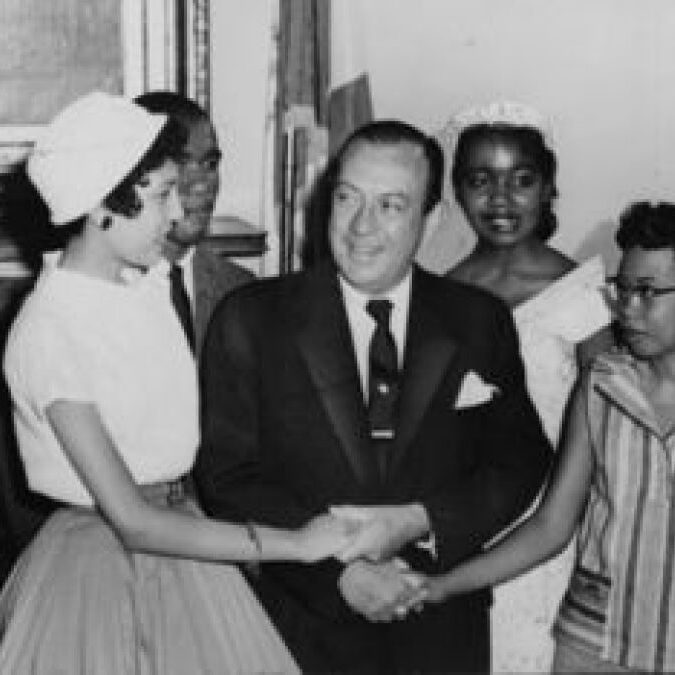
Cooper v. Aaron is a landmark Supreme Court case decided in 1958 that reaffirmed the authority of the federal government and the Supreme Court’s rulings over state governments. The case came after the Brown v. Board of Education decision, which declared racial segregation in public schools unconstitutional. In Little Rock, Arkansas, state officials refused to comply with desegregation orders and attempted to delay integration at Little Rock Central High School. The Arkansas governor and legislature argued that they were not bound by the Supreme Court’s decision in Brown. The Supreme Court unanimously ruled that state officials are required to obey federal court orders and cannot ignore or resist Supreme Court rulings. The Court emphasized that the Constitution is the “supreme law of the land,” and that states must comply with its interpretation by the Supreme Court. This case reinforced the principle of judicial supremacy and the idea that no state has the right to defy the Constitution as interpreted by the Court.
Grutter v Bollinger
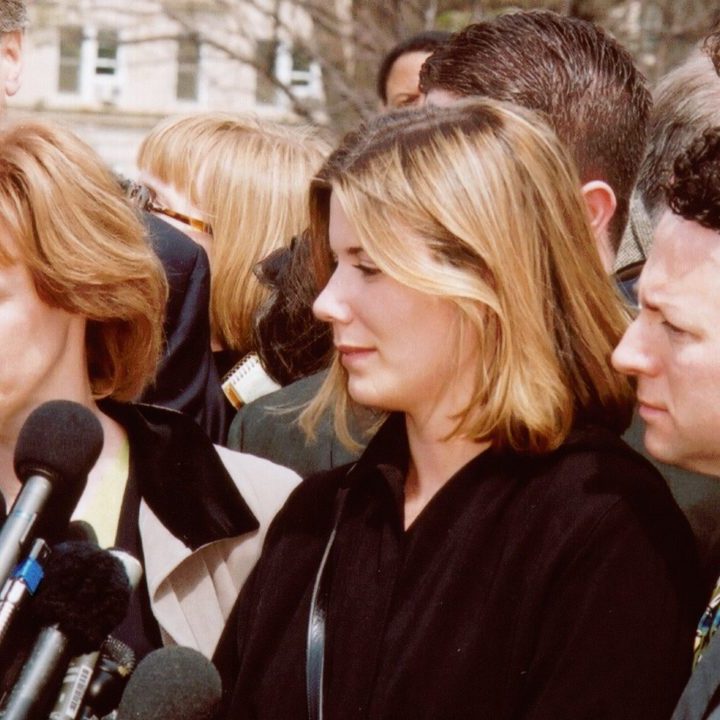
Grutter v. Bollinger is a major Supreme Court case decided in 2003 that dealt with affirmative action in college admissions. The case began when Barbara Grutter, a white applicant, was denied admission to the University of Michigan Law School and claimed she was rejected because the school gave unfair preference to minority applicants. She argued that this violated the Equal Protection Clause of the 14th Amendment, which guarantees equal treatment under the law. The University of Michigan defended its policy, stating that it considered race as one of many factors to create a diverse student body, which they viewed as a compelling educational goal. The Supreme Court, in a 5–4 decision, ruled in favor of the university, declaring that the use of race as one factor in admissions decisions was constitutional as long as it was narrowly tailored and aimed at achieving diversity. Justice Sandra Day O’Connor wrote the majority opinion, emphasizing that diversity in education benefits everyone. However, she also suggested that such policies should not be necessary forever, expressing hope that in 25 years, racial preferences in admissions would no longer be needed.
Niche Supreme Court Cases
These three Supreme Court cases each made a niche but powerful impact on American law. Wickard v. Filburn is notable for expanding federal power in a very specific, local farming context. Gideon v. Wainwright stands out for ensuring the right to a lawyer even for the most ordinary defendants. United States v. Lopez is unique for placing a rare limit on Congress’s reach under the Commerce Clause. Each case demonstrates how the Court can shape the law through specific, sometimes narrowly focused situations.

Wickard v Filburn
Wickard v. Filburn (1942) is a landmark case that greatly expanded the power of Congress under the Commerce Clause. The case involved Roscoe Filburn, a farmer who grew more wheat than allowed under federal quotas set by the Agricultural Adjustment Act. Although Filburn used the extra wheat for personal consumption and not for sale, the Supreme Court ruled that his actions still affected interstate commerce because if many farmers did the same, it would impact the national wheat market. This decision established that even local, non-commercial activities can be regulated by Congress if they have a substantial effect on interstate commerce.
Gideon v Wainwright
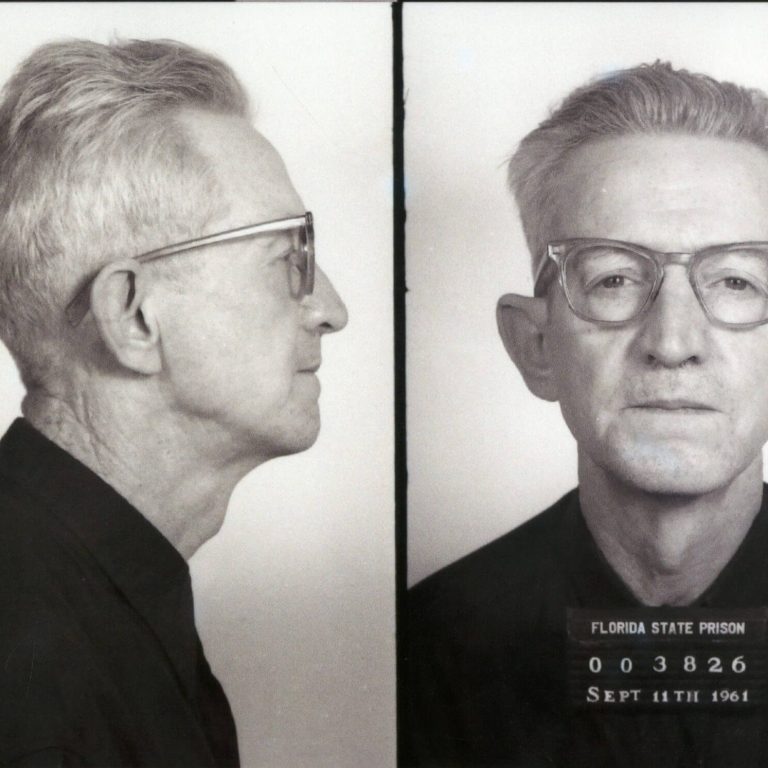
Gideon v. Wainwright (1963) is a landmark case that reinforced the Sixth Amendment right to counsel. Clarence Earl Gideon was charged with a felony in Florida but couldn’t afford an attorney. After being denied one and forced to defend himself, he was convicted. Gideon appealed to the Supreme Court, which unanimously ruled that the Constitution requires states to provide lawyers to defendants who cannot afford them. This decision ensured that every person, regardless of income, has the right to fair legal representation in criminal cases.
US v Lopez
United States v. Lopez (1995) is a landmark case that limited Congress’s power under the Commerce Clause. Alfonso Lopez, a high school student, was charged for bringing a gun to school under the federal Gun-Free School Zones Act. The Supreme Court ruled that carrying a gun in a school zone is not an economic activity that substantially affects interstate commerce, and therefore Congress had overstepped its authority. This decision was significant because it was one of the first in decades to place limits on the scope of federal power under the Commerce Clause.